

Coinciding with the Chinese President’s visit to Egypt, environmental cooperation between the two countries is once again in focus, particularly in areas related to clean energy, technology, and waste management.
These fields offer opportunities for collaboration and the exchange of expertise and technical experiences between the two sides.
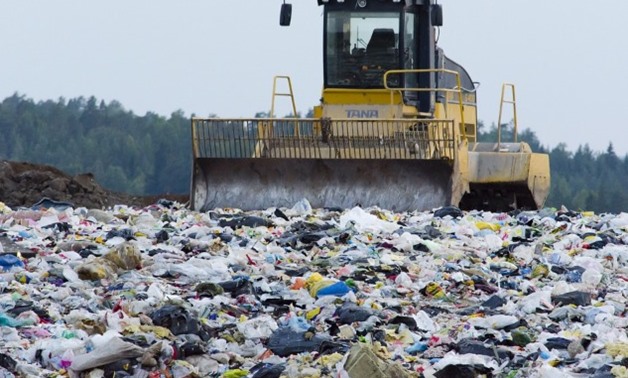
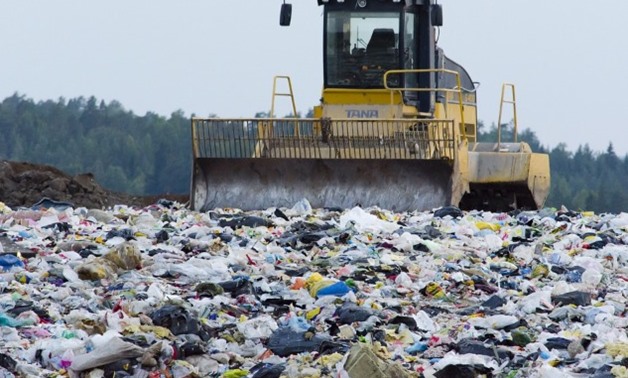
In the waste management sector, Egyptian and Chinese companies have previously held discussions on developing the management and operation of sanitary landfills.
This is part of the search for solutions to address the continuous increase in waste volumes and to make greater use of existing infrastructure.
The Waste Management Regulatory Authority previously held a meeting with representatives of a Chinese company to discuss a technical proposal for managing and operating several sanitary landfills in various governorates. They also explored mechanisms for handling waste volumes that exceed the operational capacity of treatment facilities.
Chinese Expertise in Addressing Waste Challenges
These discussions reflect one avenue of technical cooperation between Egypt and China in the environmental field.
Egypt is seeking to leverage the technological capabilities of specialized companies, while emphasizing that the application of any new technology depends on its suitability to the nature and quantities of waste generated and the environmental and operational requirements in force in Egypt.
In this context, Dr. Manal Awad, Minister of Local Development and Environment, emphasized the importance of leveraging modern technical and technological expertise to support the integrated waste management system, while studying applicable solutions tailored to the needs of each governorate.
This approach is particularly important given the challenges posed by the limited number of landfill sites in some governorates and the continuous increase in waste volume.
From Reception to Safe Disposal
During previous discussions with the Chinese company, a comprehensive plan for managing waste within sanitary landfills was reviewed. This plan encompasses everything from receiving waste and operating the site, through treatment and utilization of outputs, to the safe final disposal of rejected materials.
The plan also included the possibility of utilizing some waste outputs to produce organic fertilizer and RDF (Refuse-Derived Fuel), thus linking the waste disposal system to reuse pathways and resource utilization.
However, the proposal of these solutions was not developed in isolation from technical and environmental studies. Discussions included the importance of ensuring the proposed technology’s compatibility with the type of waste, its generation rates, and its characteristics, as well as studying the requirements for operation, maintenance, monitoring, follow-up, and reducing emissions, odors, and leaks.
Cooperation is not limited to technology
Cooperation in this area extends to leveraging existing infrastructure and connecting waste management facilities between governorates and new cities. This can help improve asset efficiency and extend the operational lifespan of sanitary landfills.
This vision stems from the need to address waste as an integrated system that encompasses not only its final disposal but also the stages of collection, reception, treatment, utilization of outputs, and safe disposal of residual waste.
For its part, the Waste Management Regulatory Authority emphasized that engaging with specialized companies does not imply the direct adoption of a specific technology. Rather, it requires studying available proposals and verifying the existence of successful practical applications of the proposed technologies.
In this context, Dr. Manal Awad stressed that utilizing the capabilities of specialized companies must be linked to applicable solutions, in order to raise the efficiency of the waste management system and maximize the benefit from the existing infrastructure, while preserving the environment and public health.