


Egypt is spearheading a diplomatic push to activate a Joint Arab Force to counter regional threats following recent escalation between Iran and the U.S.-Israel axis.
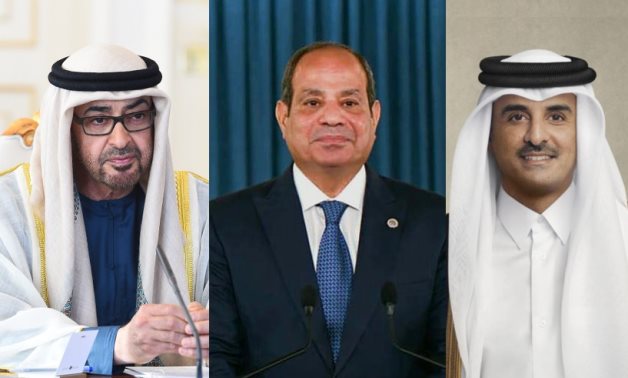
President Abdel Fattah El-Sisi underscored the necessity of collective Arab security in Sunday phone calls with UAE President Mohamed bin Zayed and Qatari Emir Sheikh Tamim bin Hamad Al-Thani.
Sisi emphasized that Egypt views Gulf security as an inseparable extension of its own national security, calling for a unified front to confront “unjustified” violations, in a clear reference to recent Iranian strikes on Gulf territory.
A presidential statement highlighted that Egypt is “ready to provide all forms of support necessary” to protect the stability of Gulf states.
Amid mounting regional expectations for a decisive Egyptian stance, the Egyptian diplomatic momentum continued in Doha. Foreign Minister Badr Abdelatty highlighted to his Qatari counterpart Sheikh Mohammed bin Abdulrahman Al Thani on Sunday the need for an Arab Joint Force, as well as “day-after” requirements for regional stability and deterrence.
An Egyptian Foreign Ministry statement on the meeting warned of the consequences of continued escalation that threatens maritime navigation as Iran continues to close the Strait of Hormuz, through which the majority of the Gulf’s oil and gas exports pass.
Abdelatty’s following stop in the UAE included talks with his Emirati counterpart Sheikh Abdullah bin Zayed Al Nahyan to examine the regional military escalation “and in detail.”
According to a formal Egyptian statement, Abdelatty warned of the risks of a wider conflict, calling for urgent de-escalation and the immediate cessation of hostilities against Gulf states.
During the talks, he reiterated the necessity of establishing preventative and defensive mechanisms, moving toward a practical framework for collective Arab security to address the “unprecedented challenges” of cross-border strikes and maritime blockage.
Meanwhile, Abdelatty held a phone call Sunday with Jordanian Foreign Minister Ayman Safadi, whose country has also been subjected to Iranian attacks. The Egyptian diplomat stressed the urgency of establishing effective security mechanisms—primarily a joint force—to protect Arab sovereignty and ensure a sustainable environment for stability.
The minister has arrived in Muscat for Monday talks with Omani officials, where he is expected to facilitate coordination on the Arab Joint Force.
Through foresight, Egypt attempted to revive the initiative during the 2015 Arab League summit in Sharm El-Sheikh. Technicalities such as command structure and funding have historically prevented the joint force from coming into effect.
The proposal dates back to 1950 in Alexandria, Egypt, where several Arab states signed the treaty that mandates cooperation against external threats but has remained largely unactivated.