

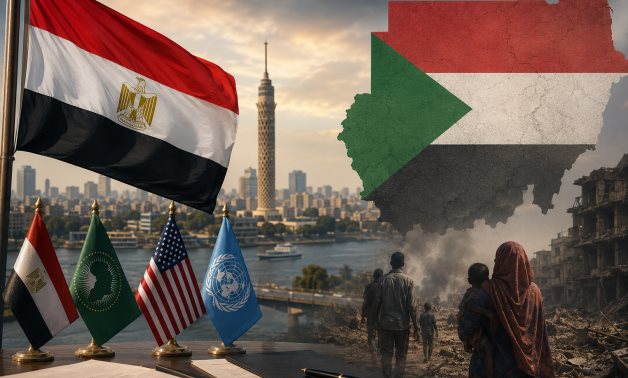
A visual illustration highlighting Egypt’s diplomatic engagement and the ongoing humanitarian crisis in Sudan.
CAIRO – 16 MAY 2026
As war continues to devastate Sudan, Egypt has intensified one of its most delicate diplomatic efforts in years, balancing humanitarian concerns, ceasefire diplomacy, and regional security calculations in an attempt to prevent the collapse of a neighboring state Cairo considers vital to its own stability.
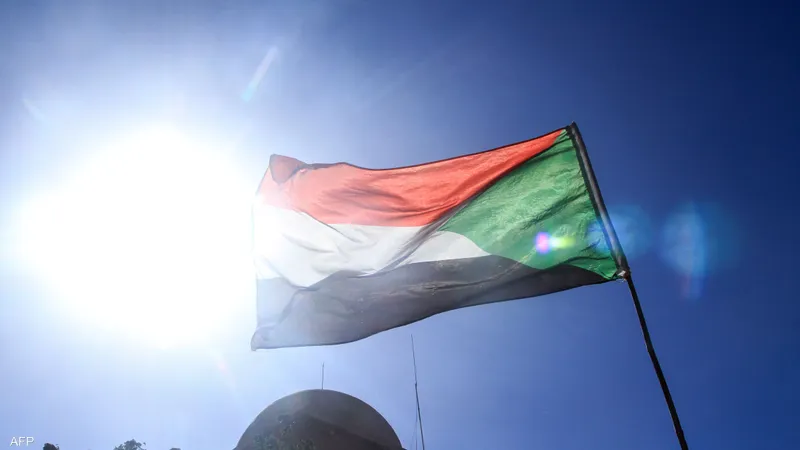


As war continues to devastate Sudan, Egypt has intensified one of its most delicate and strategically important diplomatic efforts in years: preventing the collapse of a neighboring state whose stability Cairo considers inseparable from its own national security.
From closed-door negotiations and regional diplomacy to humanitarian coordination and Sudanese political dialogue initiatives, Egypt has emerged as one of the central actors attempting to contain the conflict and push toward a ceasefire that could eventually open the door to a broader political settlement.
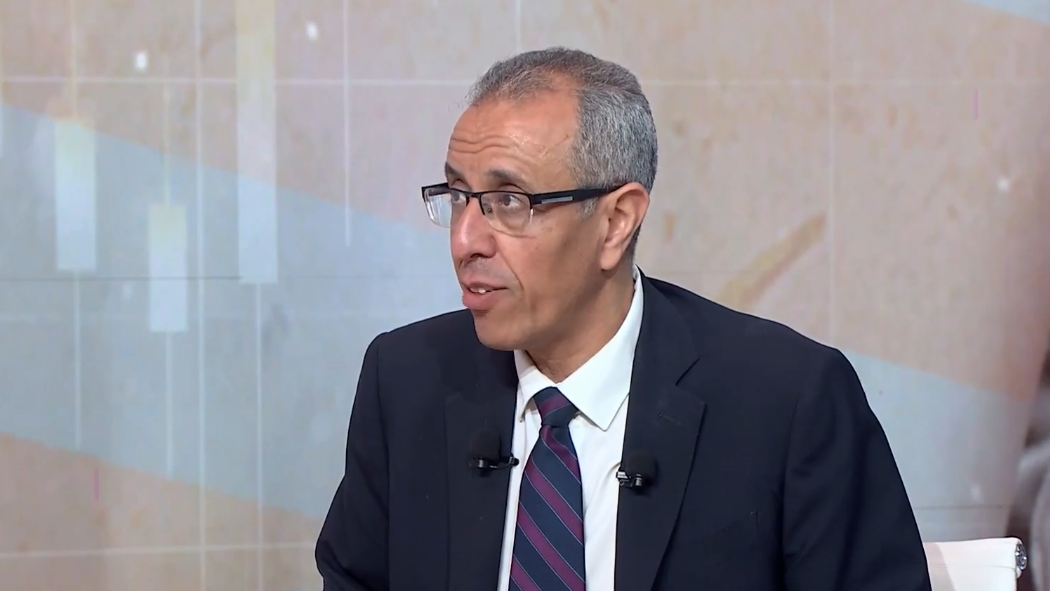
In an extensive exclusive interview on Al-Qahera News, Ambassador Yasser Sorour, Egypt’s Assistant Foreign Minister and Director of the Sudan and South Sudan Department, offered one of the clearest and most detailed explanations yet of Cairo’s position on the Sudan crisis, the complexities surrounding ceasefire negotiations, and Egypt’s broader vision for Sudan’s future.
Inside Egypt’s Sudan strategy
Ambassador Yasser Sorour outlined Egypt’s red lines on Sudan, emphasizing the importance of preserving state institutions, preventing partition, and securing a humanitarian truce that could eventually lead to a broader political settlement.
His remarks shed light not only on Egypt’s diplomatic calculations, but also on the red lines Cairo believes cannot be crossed, particularly when it comes to preserving Sudan’s state institutions and preventing any scenario that could lead to fragmentation or partition.
“The partition of Sudan is absolutely unacceptable.”
— Ambassador Yasser Sorour, Egypt’s Assistant Foreign Minister
Sudan’s stability is directly tied to Egypt’s national security
Sorour emphasized that Egypt’s engagement in the Sudan crisis began from the earliest moments of the conflict because Cairo sees Sudan’s stability as a direct component of Egyptian national security.
“Since the outbreak of the conflict in Sudan, Egypt has been moving actively because Sudan’s stability is directly linked to Egypt’s national security,” Sorour said during the interview.
He highlighted recent diplomatic activity led by President Abdel Fattah El-Sisi, including visits to Kenya and Uganda, where discussions focused heavily on developments in Sudan and regional stability.
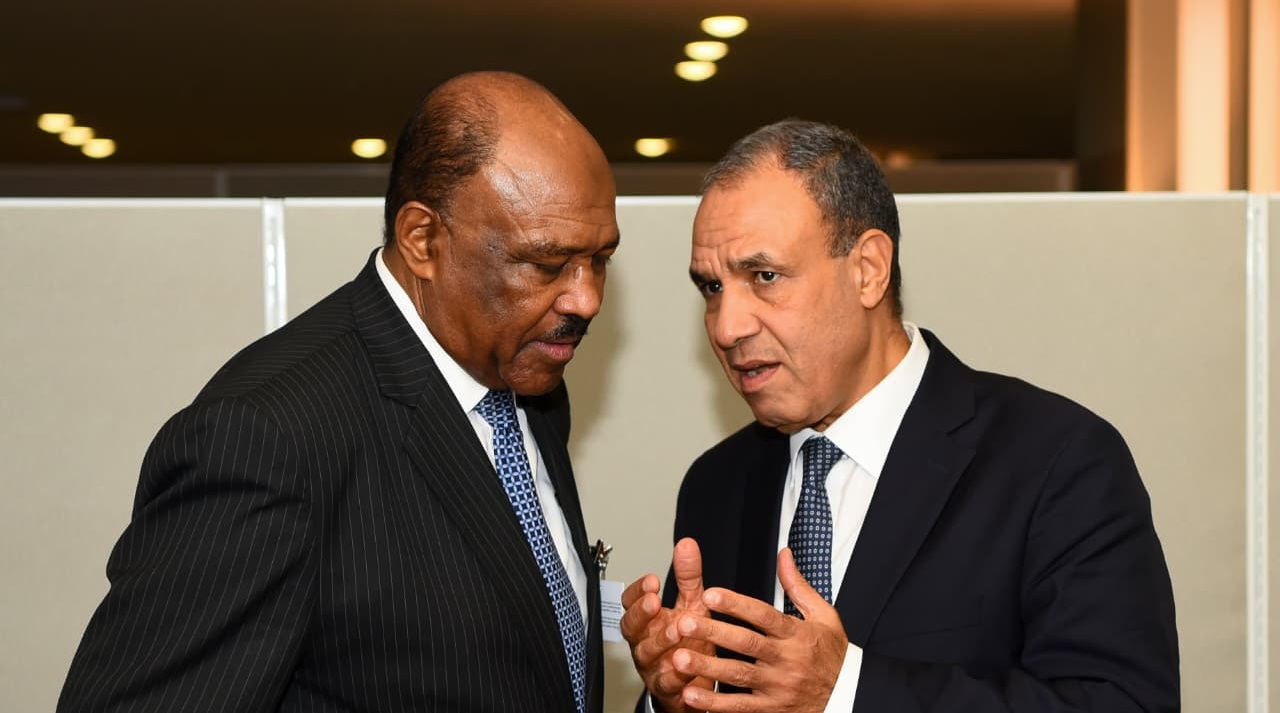
According to Sorour, Egyptian Foreign Minister Badr Abdelatty has also consistently raised the Sudan file during meetings with officials from neighboring states, African countries, European partners, as well as the United States and Britain.
At the center of these efforts, Sorour explained, is the push for a humanitarian truce that could eventually evolve into a permanent ceasefire.
The Berlin Conference and Egypt’s red lines
Sorour pointed to Egypt’s participation in the Berlin Conference on Sudan held on April 15 as a major diplomatic milestone.
One of the most important outcomes of that conference, he said, was the adoption of what became known as the “Berlin Principles,” particularly the emphasis on preserving Sudanese state institutions.
“This is extremely important,” Sorour said. “We do not place national state institutions on equal footing with a militia.”
The statement reflected a broader Egyptian position repeatedly emphasized by President El-Sisi and senior Egyptian officials: that any collapse of Sudan’s institutions would trigger catastrophic consequences for the country and the wider region.
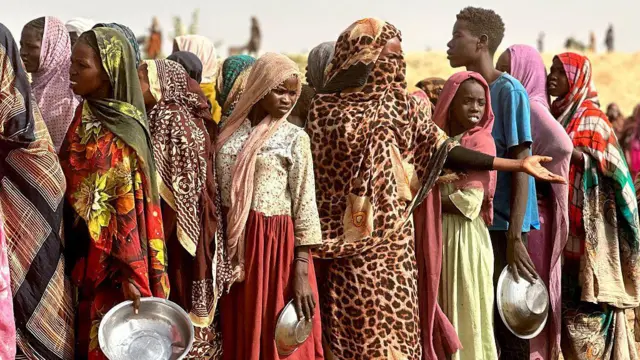
Humanitarian catastrophe
Egypt says the humanitarian consequences of the Sudan conflict continue to deepen, complicating ceasefire negotiations and increasing pressure on regional countries responding to the crisis.
Sorour stressed that Egypt’s opposition to any scenario involving Sudan’s partition is absolute.
He referenced statements issued by the Egyptian Presidency following meetings with Sudanese Sovereignty Council leader Abdel Fattah al-Burhan, saying Cairo’s red lines on Sudan had been communicated with “absolutely no ambiguity.”
Inside the quartet mechanism
A major portion of the interview focused on Egypt’s participation in the international quartet mechanism dealing with Sudan.
Sorour explained that Egypt is currently working with international partners to secure a humanitarian truce lasting ninety days, with the ultimate goal of reaching a permanent ceasefire.
Main Ceasefire Challenges
But he acknowledged that the process is extraordinarily complicated.
“We are trying to reach consensus while keeping in mind that any agreement must ultimately be accepted by the Sudanese themselves,” Sorour said.
He also revealed that Egypt remains in continuous contact with the United Nations to benefit from its expertise in ceasefire monitoring and implementation mechanisms.
“This is not a war between two states. Unfortunately, this is an internal conflict between state institutions and a militia.”
— Ambassador Yasser Sorour
Sudanese-Sudanese dialogue and the “Cairo process”
Beyond ceasefire diplomacy, Sorour devoted significant attention to the importance of Sudanese political dialogue.
He described recent workshops and political meetings involving Sudanese civilian and political groups as increasingly constructive compared to earlier stages of the war.
“At first, discussions consisted mainly of mutual accusations,” he said. “But now I have noticed mutual respect, willingness for dialogue, exchange of ideas, and efforts to reach a peaceful settlement.”
Sorour said Egypt remains committed to supporting a Sudanese-owned political process rather than imposing external solutions.
“When Egypt hosts a workshop, we do not impose our vision,” he explained. “We offer advice, but we do not impose anything because this is their country and their internal affair.”
He also revealed that Cairo is considering future rounds of political dialogue similar to the July 2024 conference that brought together a wide range of Sudanese political and civil representatives.
Humanitarian consequences and Egypt’s handling of Sudanese arrivals
The interview also addressed the immense humanitarian fallout of the war.
Sorour strongly rejected the characterization of Sudanese citizens in Egypt as “refugees.”
“We do not call our Sudanese brothers refugees. They are our guests,” he said.
Humanitarian CoordinationEgypt says Sudanese nationals continue receiving healthcare and public services similar to those available to Egyptians.
Education SupportAround 38,000 Sudanese students recently sat for Sudanese secondary school exams in Cairo.
Residency MeasuresEgypt waived residency-related fines for Sudanese citizens wishing to voluntarily return home.
Political DialogueCairo says it remains committed to supporting Sudanese-led political dialogue without imposing external solutions.
He described Egyptian-Sudanese relations as “extremely special,” stressing that Cairo has sought to facilitate the stay of Sudanese nationals as much as possible.
“The war has already wronged them enough,” Sorour said while discussing Sudanese students displaced by the conflict.
A conflict Egypt believes cannot be ignored
Throughout the interview, one theme remained constant: Egypt sees the Sudan crisis not as a distant regional conflict, but as a direct strategic challenge with profound security, humanitarian, and geopolitical implications.
From ceasefire negotiations and political mediation to humanitarian coordination and opposition to partition, Cairo’s approach reflects an attempt to balance diplomacy, regional stability, and long-term strategic interests amid one of the region’s most dangerous conflicts.
And while Egyptian officials acknowledge the immense difficulties surrounding all mediation efforts, Cairo continues to push for a political path that could eventually end the war and preserve Sudan’s state institutions before the country slips deeper into fragmentation and instability.